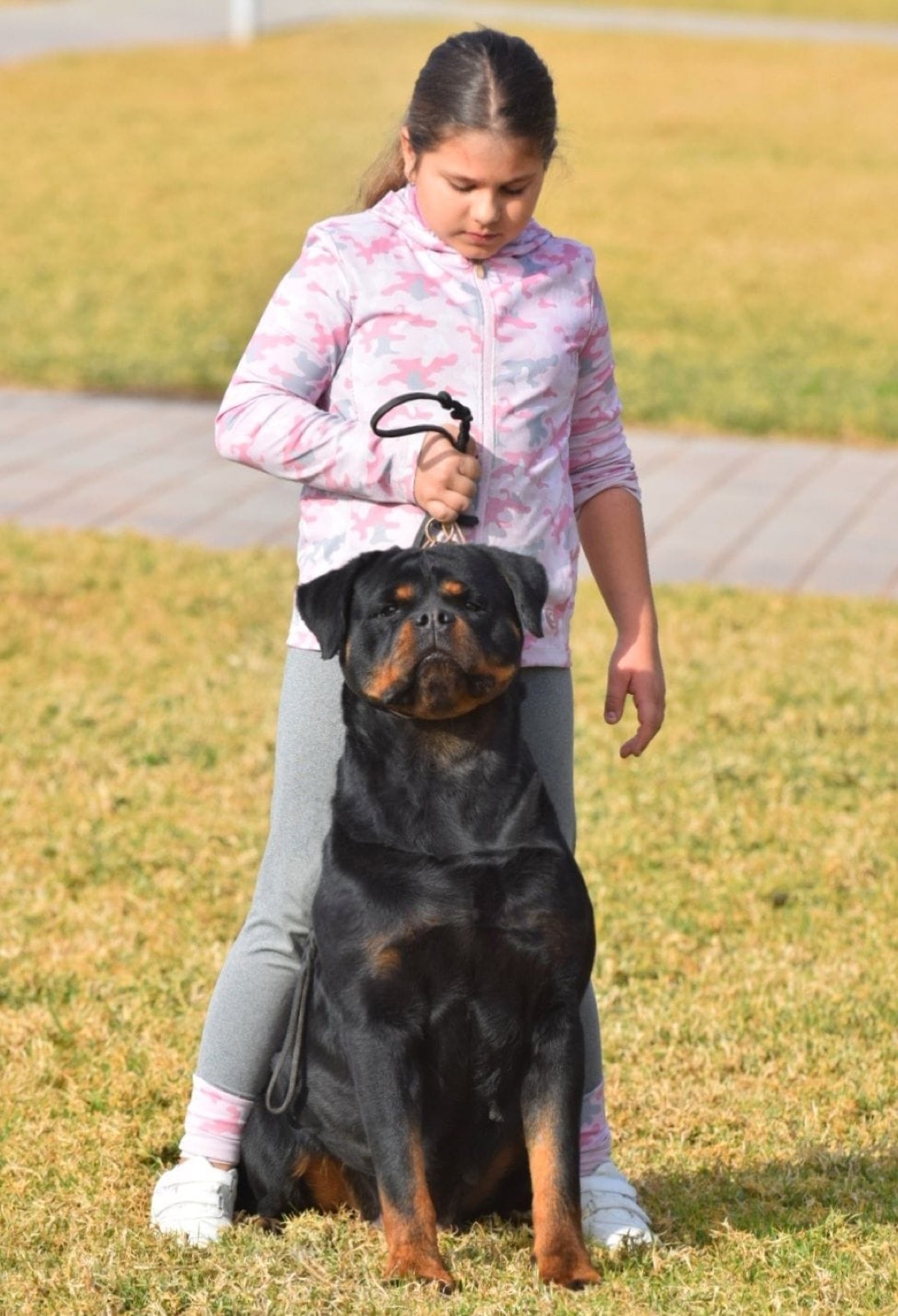
Traceability across generations
Bloodlines and pedigree
A pedigree is a document of parentage: it certifies which dogs a puppy descends from and under which registry it is recorded. That is both a great deal and very little. It tells you where the dog comes from; it does not tell you what the dog is like.
Loyalty and nobility. Temperament and strength.
01
What a pedigree certifies, and what it does not
A pedigree is the official genealogy issued by each country's kennel club within the FCI system. In Spain dogs are entered in the Spanish stud book and each one receives its own registration number, unique and permanent. The document certifies ancestry and registration; it is not a certificate of quality or of health.
This is worth saying plainly, because it is so often used as a sales argument: a puppy with a pedigree is not, for that reason alone, a healthy or balanced puppy. A genealogy gains its value when what stands behind each name is genuinely documented.
- Certifies ancestry and official registration
- Gives the dog a unique, permanent registration number
- Does not by itself guarantee health, character or conformation
02
How to read a genealogy
A pedigree usually covers four or five generations. The first two, parents and grandparents, carry most of the influence over a puppy; from the third generation onwards each individual ancestor's contribution thins out quickly. A dazzling name in the fifth generation therefore says considerably less than it appears to.
What does matter is which names repeat, and where. The same dog appearing on both sides concentrates its characteristics for better and for worse: it fixes what it contributes, but it also doubles what it hides. That is precisely the point at which a combination is studied carefully, or set aside.
- Parents and grandparents carry most of the influence
- An ancestor repeated on both sides fixes strengths and faults alike
- The degree of relatedness between the parents is weighed before deciding
03
What we look for when combining two lines
A mating is not about putting two good dogs together, but two dogs that complement each other. Every dog has strengths and weak points, and the question is always the same: does the other parent correct what is missing without giving up what already works? When the answer is not clear, the mating does not happen.
At Rottvale that means looking at structure, movement, character and what we know of each dog's family all at once: how its parents aged, what temperament its littermates showed, what its descendants have passed on. That history is breeding information, and it often counts for more than a title.
04
From the document to the individual dog
Traceability rests on two things: that the dog can be identified beyond doubt, and that its parentage can be verified. Without those, a genealogy is a list of names resting on somebody's word.
Our individual records link parents, descendants and litters wherever that information exists, so that a line can be followed in both directions rather than read as an isolated claim. What is not documented is not published.
Rottvale Kennel